Which Paint by Numbers Canvas Size Fits Your Photo?
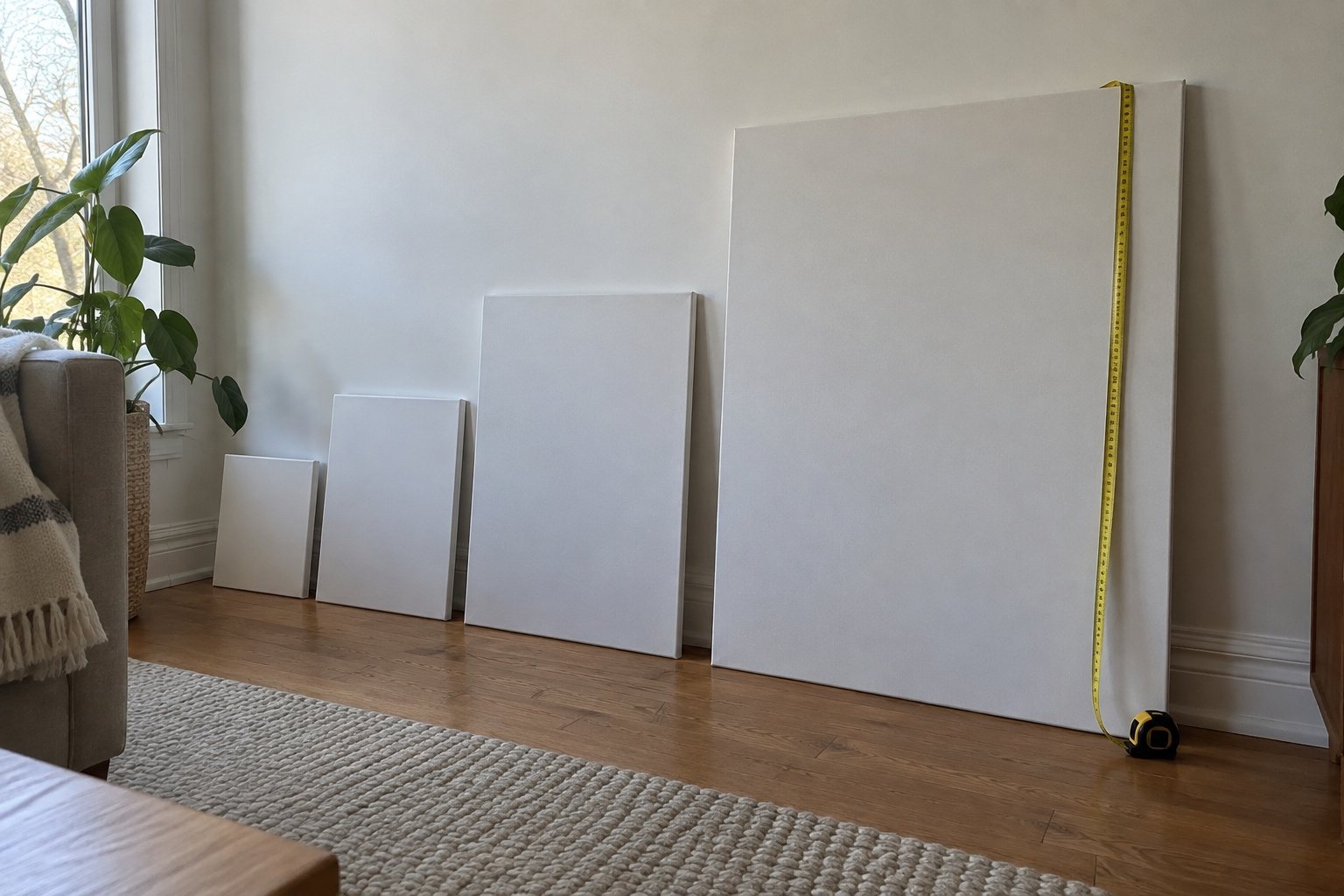
A 20x30 cm canvas looks friendly in the shop. At home it turns out to be the size of a sheet of printer paper, and the portrait you planned for it now has to fit its eyes into two square centimetres. Canvas size is the one decision you cannot fix later. The pattern, the number of areas, the brushes you need and the wall you hang it on all follow from it.
The canvas decides how big your areas get
A generator splits your photo into a fixed number of areas and then fits them onto whatever canvas you chose. Same photo, same colour count, but on a small canvas every area shrinks. On a 30x40 cm canvas the smallest areas end up around 2 mm across, and a normal brush cannot land inside them without painting the neighbour too.
We measured what the floor looks like on a portrait: at a 5 mm minimum the pattern had 552 areas on a 40x50 cm canvas, and dropping the floor to 2.5 mm produced 974 areas so the pupil came back. Those 974 areas need room. On a 30x40 they would be unpaintable, on a 60x80 they are comfortable. The area count is only half the decision.
The sweet spot is 40x50
For a first canvas, 40x50 cm is the size we recommend and the one most people should order. The areas stay comfortable, it fits on a kitchen table, it costs €49.95 as a kit, and it looks like something once it is on the wall. Faces work too, as long as the crop is close enough.
Every size, and what it is actually for
| Canvas | What it handles | Watch out for |
|---|---|---|
| 20x30 cm | One simple subject, a single flower, a logo-simple shape | No faces. Areas shrink below what a brush can reach |
| 30x40 cm | A tight crop of one pet or one face | Crop closer instead of hoping the detail survives |
| 40x50 cm | The all-rounder: pets, portraits, most landscapes | Still needs a close crop for a face |
| 50x70 cm | Portraits with breathing room around the eyes | Needs a real wall spot and a steady evening routine |
| 60x80 cm | A statement piece, still shippable framed | Landscape subjects work better than tight faces here |
| Up to 100x100 cm | Big walls and wide scenes with lots of sky or water | A square metre of wall, and ships unframed |
Framing stops at 60x80
Kits up to 60x80 cm can be ordered with a frame around them. Everything larger ships unframed, rolled or flat, and you arrange the frame yourself. That is not a detail to discover on delivery day: a 100x100 cm canvas costs real money to frame at a framer's, so if the frame matters to you, that alone can decide between 60x80 and the big sizes.
Faces set the minimum size
An eye needs several separate areas, iris, pupil, white and lid shadow, and each of those needs to be a couple of millimetres wide or no brush reaches it. On a 30x40 cm canvas with a half-body portrait, the eyes are simply too small. You have two honest options: crop the photo tighter so the face fills more of the canvas, or move up a size. Painting the same pattern smaller never works, it just loses the likeness. See which photos turn into a good paint by numbers before you upload.
Or print the pattern instead of ordering a canvas
If the point is trying the hobby rather than filling a wall, printing changes the maths completely. You can print a pattern at home on A4 or A3, paint it with student paints, and only order a canvas once you know the hobby sticks. For eyes that struggle with small areas in the first place, there is a whole approach built around that: large print paint by numbers. And once the canvas is chosen, the next decision is how many colours your painting needs.
Measure the wall tonight
Tear off a strip of newspaper or masking tape in the exact size of the canvas you are considering and tape it to the wall it will live on. A 60x80 looks generous on a screen and modest above a sofa; a 100x100 takes a square metre and eats the room if the room is small. Ten seconds of tape beats a canvas leaning behind the door. Pick a custom paint by numbers from photo only after the size survives that test.
Where the size decision goes next
The canvas market keeps drifting bigger. Framing is the limiter: glass and stretcher bars above a metre get expensive fast, which is why most large canvases ship unframed today. If printers keep improving, printed borders and hang-everything hardware will probably move up to the bigger sizes too, and the size you can order framed will grow with it. Until then, the sizes above are the honest map of what works.