Paint by Numbers for Adults: What Actually Changes
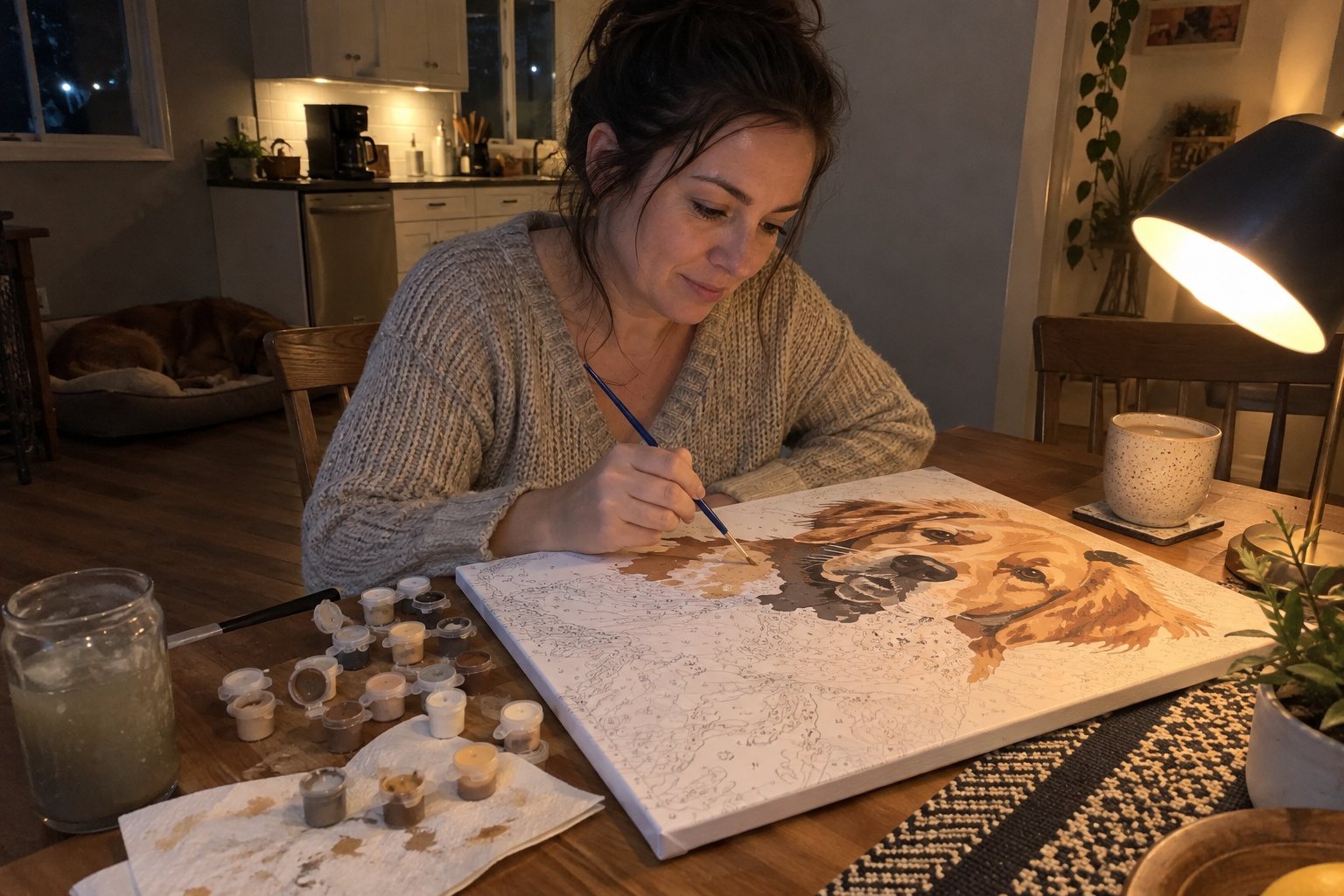
A box in the craft aisle says "ages 8 and up". The box next to it says "for adults" and costs three times as much. Open both and the paint pots look the same, the brushes look the same, and the canvas in both is printed with little numbers. The real difference between a kids kit and an adult one is not on the box at all. It is in the pattern, and you can judge it before you spend anything.
The label on the box proves nothing
We have watched people struggle through kits labelled "for adults" that were easier than what children paint. The label usually refers to the subject: a landscape instead of a cartoon pony, or simply a reason to charge more. What actually makes a kit harder is how many areas the pattern has and how small they are, and none of that is printed on the box. A studio can take a photo of a cathedral, reduce it to twelve colours, call it sophisticated, and hand you six hours of painting large, calm blocks. Another can hand you a goldfish with a thousand areas the size of a grain of rice.
So ignore the age on the front. Look at two things instead: the canvas size and the colour count, because those two numbers decide everything else.
Four things that actually change for adults
Paint by numbers for adults means, in practice, four shifts away from a kids kit:
| Kids kit | Adult canvas | |
|---|---|---|
| Smallest areas | Big enough for a thick brush, roughly 8 mm and up | Down to 2-3 mm, where a fine brush and patience take over |
| Colours | 8 to 12 pots | 24 to 48 pots, and the extra ones are the skin tones |
| Time | One afternoon | A 40x50 cm canvas with 24 colours takes most people eight to fifteen hours |
| Subject | Printed cartoon or landscape | Often your own photo, which is the hardest subject of all |
The colour count is the one people get wrong. More colours sounds like more detail, but it really means smaller areas and more pot-swapping. See how many colours your painting needs before you reach for the 48-colour option.
Why adults pick it up at all
The honest answer is that it occupies your hands and asks nothing else of you. You are not deciding what to paint, mixing anything, or judging your own drawing. You match a number to a pot and fill a shape. Craft chains sell it exactly that way; Hobbycraft, the UK chain, calls paint by numbers "a great wellbeing activity" and recommends it with music on. That matches what the people who finish canvases tell us: the appeal is not the art, it is the hour in which nothing else is asked of you.
The second answer is that adults want their own subject. A golden retriever, the garden you sold last year, a grandparent. That is where a paint by numbers generator earns its place: you upload your own photo, see the numbered pattern before anything is printed, and only then decide whether it is worth a canvas.
The first evening looks bad, and that is the deal
Nobody warns adults about this, because it feels silly to say: a third of the way in, your canvas looks like a mistake. The outlines are filled patchily, the colours sit next to nothing that resembles a face, and the numbers still show between your strokes. Every canvas goes through this phase. It resolves somewhere around two thirds, when the shapes finally touch each other.
And there is a second thing worth saying plainly. A paint by numbers painting does not look like brushwork. It looks flat and printed, because that is what filling pre-defined areas produces. If you want loose strokes and your own composition, this hobby will disappoint you, and no kit fixes that. What you get instead is a finished thing that looks like the photo you started with, and for most adults that trade is exactly why it works.
Try it tonight without buying anything
Upload one photo to the free generator and squint at the preview the way you would squint at the photo itself. If the face still reads when it is blurry, the pattern will work. Then start small: print it yourself on A4 and paint it with whatever you own, or read which photos turn into a good paint by numbers before you order a canvas. The brushes that come in a kit are serviceable, but which brushes are worth it is worth ten minutes once you know you like the hobby.
What happens after the first canvas
The second canvas is where adults usually go wrong in the other direction: they pick something twice as detailed. The better move is the same subject, one step bigger. A face that felt cramped at 30x40 has room at 50x70, and the areas that defeated your fine brush become comfortable. Once the size and the photo feel right, the pattern itself stops being the obstacle, and the evenings do the rest.